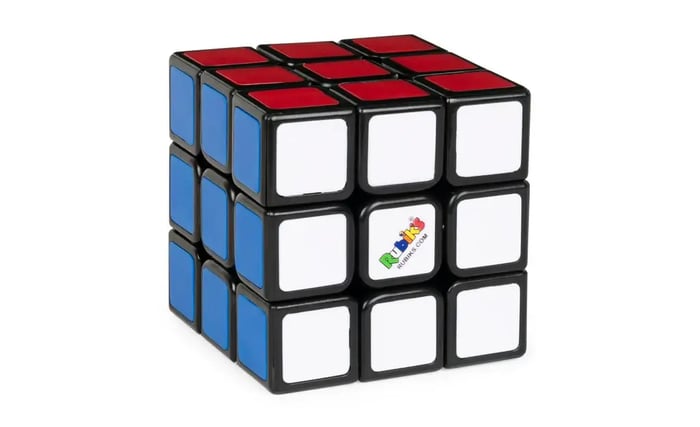
A Megaminx is a 12-sided dodecahedral puzzle with 50 movable pieces that you solve using modified 3x3 cube methods applied layer by layer. The diansheng megaminx exemplifies this design: the first layer stars and corners follow familiar patterns; then you repeat similar edge and corner sequences for five middle layers before tackling the top layer with adapted OLL and PLL algorithms.
This guide walks you through solving a Megaminx from the first layer to the final face, breaking down each step using algorithms you already know from 3x3 solving. You'll learn the layer-by-layer method that works for beginners and builds the foundation for faster times, whether you're using a diansheng fto or any other quality puzzle.
- Building the first layer star and completing the first five corners
- Solving five middle layers with edge and corner insertion
- Orienting and permuting the top-layer edges and corners
- Common mistakes and how a quality Megaminx improves your solving experience
Step 1: Build the First Layer Star
Pick any color for your starting face and hold that face on top. Your goal is to create a five-pointed star around the center piece using the five edge pieces that match your chosen color. This step uses intuitive problem-solving rather than algorithms.
Look for edge pieces with your top color anywhere on the puzzle. Rotate the top layer to position an empty slot above the matching side center, then bring the edge piece up from below. If the edge sits in a bottom layer, turn that layer to place the edge directly below its correct position, then rotate the side face twice to bring it up.
Once you complete the five-pointed star, you've finished the first-layer edges step. The star should show your chosen color on top with matching side colors on each adjacent face. This foundation makes the corner steps straightforward.
Step 2: Insert the First Layer Corners
With your layer star complete, place five corner pieces along the edges. Each corner has three colors that must match the center pieces of three adjacent faces. Hold the puzzle with your completed star on top and locate corners in the bottom layers.
Position a corner piece directly below its target slot by rotating the bottom layers. The corner should sit in the bottom layer with its top-color sticker facing you or to the side, never on the bottom. Use this algorithm to insert it: R U R' U' (repeated until the corner slides into place, usually 1-3 times).
If a corner sits in the correct position but twisted wrong, use the same R U R' U' sequence to pop it out, then reinsert it correctly. After placing all five layer corners, your first face and its surrounding ring should be completely solved. This completes your first megaminx layer.
Step 3: Solve the Second Layer Edges
Turn your puzzle upside down so the solved face sits on the bottom. The top face now has a white center (or whatever color sits opposite your starting color). You'll build four more layers using the same edge and corner techniques, creating a pattern of solved layers that work downward toward the final top layer.
Find edge pieces that belong in the second layer by looking for edges without the top color. These edges need to slot between the already-solved corners. Position the target edge on the top layer directly above its destination, with the side color matching the center below it.
Use these algorithms based on where the edge needs to go:
Right insert: U R U' R' U' F' U F
Left insert: U' L' U L U F U' F'
Repeat this process for all five edges in the second layer. If an edge is in the correct position but flipped, use either algorithm to move it to the top layer, then reinsert it correctly. The edge pieces should now connect your first layer to a growing band of solved sections.
Step 4: Insert the Second Layer Corners
The corner step for the second layer mirrors the first-layer process. Locate corner pieces on the top layers that don't contain the top color. These corners belong in the second layer between the edges you just placed.
Position each corner on the top layer above its target slot, with the corner's colors matching the three surrounding center pieces. The same R U R' U' algorithm works here, repeated until the corner drops into the correct position with the right orientation.
Work around the puzzle methodically, placing each of the five second-layer corners. After this step, you'll have two complete layers solved. The pattern becomes repetitive now as you tackle the remaining middle layers.
Step 5: Complete Three More Middle Layers
You'll repeat the edge-and-corner insertion process three more times to build layers three, four, and five. Each layer follows the same steps as layers one and two, making solving a megaminx more about patience and consistency than about memorizing new algorithms.
For each new layer, start with the five edge pieces that don't contain the top color, using the right insert (U R U' R' U' F' U F) and left insert (U' L' U L U F U' F') algorithms. Then place the five-layer corners using R U R' U' repeated as needed.
After completing layer five, you'll have solved 10 of the 12 faces, leaving only the top layer. The bottom hemisphere of your Megaminx should be completely finished, with the top face showing a mix of scrambled pieces around a single center. This is where the solve shifts to adapted 3x3 methods.
Step 6: Orient the Top Layer Edges
The top layer edges need to form a star matching the top center color, similar to OLL on a 3x3 cube. Look at the top face and identify which edge pieces already show the correct color on top. You might see a star, a line, an L-shape, or no edges oriented correctly.
Use this algorithm to orient the edges: F (R U R' U') F.'
This is the same algorithm as the 3x3 edge orientation. Repeat it as needed, rotating the top layer between executions, until all five top edges on the top face show the correct color.
The edges won't be in the correct position yet, just oriented with the right color facing up. You'll fix their positions in the next step. If you're working with a quality Megaminx from SpeedCubeShop, the smooth turning makes these repetitive algorithms faster and less tiring on your fingers.
Step 7: Permute the Top Layer Edges
Now you need to move the oriented edge pieces to their correct positions, matching the side colors to the layers below. This step adapts the U-perm from 3x3 PLL algorithms. Hold the puzzle so that one edge sits in the correct position (matching all three colors with the layers below).
Position the solved edge at the back of the top face. Use this algorithm to cycle the remaining four edges clockwise: R U' R U R U R U' R' U' R2
If the edges need to move counterclockwise, perform the same algorithm but mirror it to the left side.
After one execution, check whether all edges are now in the correct positions. If not, find the edge that's now correct, place it at the back, and repeat. Once all five top-layer edges match their surrounding colors, you'll move to the corners.
Step 8: Solve the Top Layer Corners
The final step combines corner positioning and orientation, similar to a 3x3 layer PLL. First, check if any corners already sit in the correct position (matching all three surrounding colors, even if twisted). If you find one, hold it at the front-right position.
Use this algorithm to position the remaining corners: U R U' L' U R' U' L
Repeat until all five corners sit in their correct positions. Some may be twisted the wrong way, but they should be in the right spots relative to the edge pieces and side colors.
To orient the twisted corners, hold the puzzle with a twisted corner at the front-right position. Use R' D' R D repeated until that corner orients correctly (usually 2 or 4 times). Don't worry when the rest of the puzzle looks scrambled during this process. After fixing the corner, rotate just the top layer (U or U') to bring the next twisted corner to the front-right, then repeat R' D' R D.
Continue around the top layer until all corners show the correct color. After the last corner, the entire top layer will snap back into place, and your Megaminx will be completely solved. In 2026, competitive cubers like Aidan Grainger are achieving sub-32-second averages, but your first solve might take 30-45 minutes as you internalize these steps.
Common Mistakes When Learning to Solve a Megaminx
New solvers often rush the first-layer star, leaving edges slightly misaligned. Each edge piece must match both the top center and the side center perfectly, or your corner insertions will fail. Take an extra second to verify each edge before moving to the corners.
Another frequent error occurs during middle-layer solving when cubers forget to check whether a piece already sits in the correct position but still needs to be removed. If an edge or corner is in the right slot but oriented wrong, you must extract it to the top layer first, then reinsert it properly. Trying to force it with random moves scrambles your progress.
In the top layer, many beginners panic when the R' D' R D corner-orientation algorithm temporarily scrambles the puzzle. This is normal. The key is to rotate only the top layer (U moves) between corners, never rotating the entire puzzle or disrupting the bottom layers. Trust the process, and the puzzle will resolve itself after the final corner.
A quality cube makes a significant difference in learning speed. If your Megaminx catches, locks up, or requires excessive force to turn, you'll develop bad habits and slow down your progress. SpeedCubeShop carries beginner-friendly Megaminx puzzles that turn smoothly out of the box, plus lubricants that eliminate friction on budget models. The 4.9-star rating from ~5,000 reviews reflects how the right hardware can accelerate your learning curve.
What Makes a Megaminx Easier or Harder to Solve
The physical quality of your puzzle directly affects its difficulty. Budget Megaminx puzzles often have tight tolerances, rough plastic, and poor corner-cutting, forcing you to align layers perfectly before each turn. This adds mental load when you should be focusing on algorithms and piece recognition.
Modern speedcubes feature factory magnetized edges and corners that snap into alignment automatically, reducing misalignments and lockups. The magnets provide tactile feedback that helps you execute algorithms more accurately, especially during the repetitive middle-layer steps where muscle memory matters most.
Proper lubrication transforms a stiff puzzle into a smooth-turning tool. SpeedCubeShop's lubricant selection includes options specifically formulated for larger puzzles like the Megaminx, where you need speed without sacrificing control. The right lube combination can cut your solve time by 10-15% simply by reducing the physical effort required for each turn.
Puzzle size also affects difficulty. Smaller Megaminx variants (kilominx, master kilominx) follow the same solving method but require more precise finger movements. Standard-size Megaminx puzzles offer the best balance of comfortable handling and clear piece visibility for learners.
Apps and Tools for Megaminx Solving
The ASolver app reached over 22,000 installs in 2026 and supports Megaminx among other puzzles, providing near-optimal solutions by analyzing photos of your scrambled puzzle. The app averages around 48 moves for complex scrambles on comparable puzzles, though optimal Megaminx solutions remain mathematically unsolved.
These solver apps work best as learning aids when you're stuck mid-solve, not as substitutes for understanding the method. You'll learn faster by working through mistakes manually than by blindly following app instructions. Use solvers to verify your approach or to see alternative algorithms for specific cases.
Online scramble generators help you practice efficiently by providing random scrambles that match WCA competition standards. This matters more than it sounds because truly random scrambles expose you to every possible case, preventing you from accidentally memorizing patterns from your own scrambling habits.
Timer apps with Megaminx-specific features let you track your progress across the eight-step method. Many competitive cubers use these to identify which steps slow them down most, then drill those sections separately. The data helps you focus practice time on your actual weaknesses rather than repeating steps you've already mastered.
Moving Beyond the Beginner Method
Once you can solve a Megaminx consistently using the layer-by-layer method, you'll naturally start looking ahead to the next layer while finishing the current one. This lookahead skill dramatically reduces solve time without learning new algorithms. While placing a corner, scan the top layer for the next edge piece you'll need.
Advanced methods like Cage and S2L (second two layers) reduce the middle layer steps by pairing edges and corners before insertion, similar to F2L on a 3x3. These methods require learning additional algorithms but eliminate the repetitive back-and-forth between edge and corner steps.
The top layer offers the most room for optimization. Competitive solvers use full OLL and PLL algorithm sets adapted for the pentagonal top face, recognizing cases instantly and executing solutions in one or two algorithm sequences instead of the multi-step beginner approach.
At SGC 2026 National, a competitor placed second with a 32.56-second average using a GAN Megaminx despite fatigue and occasional lockups. The choice of hardware matters at competitive speeds. SpeedCubeShop's selection includes the same flagship models that podium finishers use, plus the Cosmic customization service that hand-tunes tensions, lubrication, and magnet strength to match your turning style.
Frequently Asked Questions
Is a Megaminx Harder Than a 3x3 Cube?
A Megaminx is longer to solve, but not conceptually harder if you already know how to solve a 3x3 cube. The first and middle layers use intuitive methods similar to the beginner 3x3 approach, and the top layer adapts familiar OLL and PLL algorithms. The main challenge is the puzzle's size (50 movable pieces versus 20 on a 3x3) and the repetition required for the five middle layers. Most cubers who can solve a 3x3 in under five minutes will solve their first Megaminx in 30-45 minutes.
How Long Does It Take to Learn How to Solve a Megaminx?
Most cubers learn the basic layer-by-layer method in a single 2-3 hour session, assuming they already know the 3x3 methods. Your first successful solve might take 45 minutes, but this drops to 15-20 minutes within a week of practice as you memorize the edge and corner algorithms. Reaching sub-5-minute solves typically requires a month of regular practice, while competitive times under 90 seconds demand advanced methods and hundreds of solves.
Do You Need Different Algorithms for a Megaminx?
The middle layer algorithms (right insert, left insert, and corner insertion) are Megaminx-specific, but they're simple sequences you'll memorize quickly through repetition. The top layer uses adapted versions of 3x3 OLL and PLL algorithms you likely already know. The R U R' U' corner insertion and F (R U R' U') F' edge orientation algorithms are identical to their 3x3 counterparts. You'll learn roughly six core algorithms for the beginner method.
Can You Use a Megaminx Solver App to Learn?
Solver apps like ASolver can help when you're stuck mid-solve or want to verify your approach, but they won't teach you the method effectively. The layer-by-layer approach builds muscle memory and pattern recognition that apps can't provide. Use solvers as a safety net during your first few attempts, then wean yourself off them. The goal is to internalize the method so you can solve without external help, which apps actively prevent when used as a crutch.
What's the Best Megaminx for Beginners in 2026?
Look for a factory-magnetized Megaminx with moderate tensions and smooth turning out of the box. The magnets help with alignment during algorithms, reducing mistakes while you're still learning piece recognition. SpeedCubeShop carries beginner-friendly options that balance quality and price, and its 90-day return policy gives you 3 months to decide whether the puzzle suits your learning style. Avoid the cheapest Amazon options, which often have poor quality control and will frustrate you during the learning process.
Start Solving Your Megaminx Today
Learning how to solve a Megaminx builds directly on your 3x3 knowledge and opens the door to the entire family of dodecahedral puzzles. The layer-by-layer method gives you a reliable framework that works every time, and the repetitive nature of the middle layers builds the muscle memory that eventually leads to faster solves. Your first complete solve will take patience, but the second one will be noticeably quicker.
SpeedCubeShop stocks competition-grade Megaminx puzzles from beginner-friendly models to flagship speedcubes used by sub-30-second solvers, all shipping same-day when you order before 1 PM Pacific. The 4.9-star rating across ~5,000 reviews reflects 15+ years of helping cubers find the right puzzle for their skill level. Browse the Megaminx collection and grab the lubricants that'll keep your puzzle turning smoothly through hundreds of practice solves.